From Cockpit to Tower: How NASA’s Digital Push Is Transforming Airport Clearances
At busy airports, the airwaves are a precious resource. With only a handful of radio frequencies shared by all aircraft and controllers, a single overlapping transmission can cause chaos—especially during critical operations like clearances. Digital clearance delivery offers a sleek solution: pilots confirm instructions with a button push, and updates appear instantly on the controller’s screen and the flight management system. But this technology isn’t limited to takeoffs and landings. NASA engineer Will Cummings-Grande is exploring how to extend digital logic to taxi instructions, and his journey to learn the system firsthand led him to a unique FAA training. In this Q&A, we dive into the details of his work, the training he undertook, and what it means for the future of air traffic management.
What problem does digital clearance delivery solve in busy airports?
At a congested airport, all aircraft share just a few radio frequencies. Time and spectrum are limited—if two people speak at once, both messages can be lost. Communications like “clearance delivery” require long transmissions and readbacks, which become especially challenging during bad weather or other events that force many planes to talk to controllers simultaneously. Digital clearance delivery clears that channel for urgent, time-critical calls. Instead of voice calls, pilots receive instructions digitally and confirm with a single button press. The response goes directly to the controller’s screen, and the updated information loads into the flight management system. This reduces radio congestion, cuts down on errors, and speeds up the flow of traffic—a practice already in place at 72 U.S. airports equipped with the Tower Data Link Services (TDLS) system.
Who is Will Cummings-Grande and what is his role?
Will Cummings-Grande is an aerospace engineer in the Systems Analysis and Concepts Directorate at NASA’s Langley Research Center. He leads technical work on Communications Architecture and Performance for Digital Clearance within NASA’s Air Traffic Management and Safety (ATMS) project. His focus is on advancing the next layer of digital clearance—extending the same digital logic used for airborne clearances down to taxi instructions on the ground. This includes researching how pushback timing, routing, and runway assignments can be delivered digitally rather than over the radio. To ground his research in real-world operations, he sought firsthand experience with the current digital clearance system used by air traffic controllers—a hands-on approach that led him to FAA training.
Why did Cummings-Grande attend FAA training for TDLS?
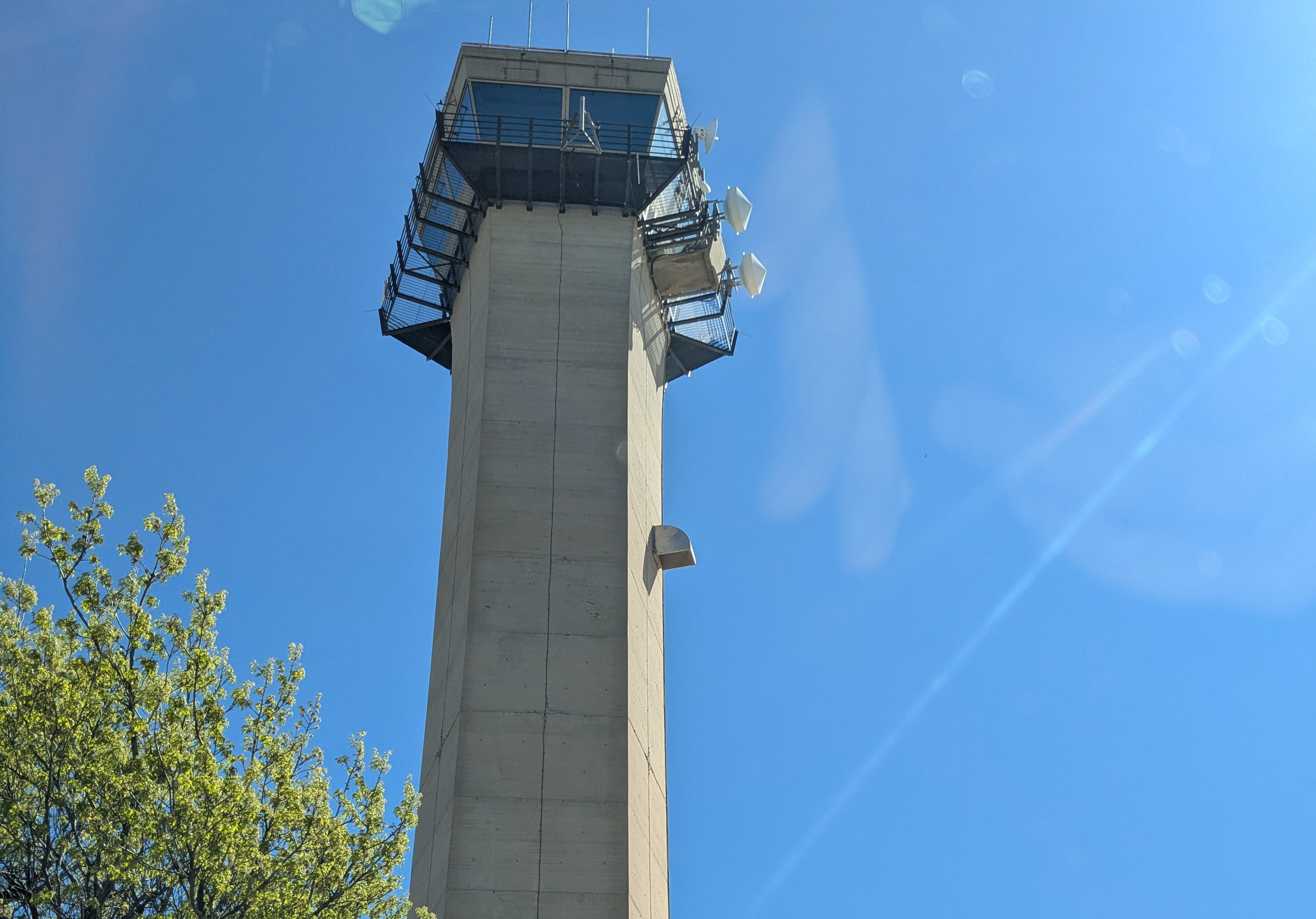
Cummings-Grande knew that to truly understand digital clearance delivery, he needed to see it in action—not in a research paper, but in a real tower, with real systems and the people who run them every day. The Federal Aviation Administration (FAA) offers a specialized course on the Tower Data Link Services (TDLS) system, but it’s designed for working controllers. He reached out to the FAA Academy “on a hope and a prayer” asking to be admitted as a student. Remarkably, they accepted. In early April, he traveled to the Mike Monroney Aeronautical Center (MMAC) in Oklahoma City to complete the same two-day, hands-on TDLS Application Specialist training required of controllers at all 72 U.S. airports currently equipped with digital clearance capability.
What did Cummings-Grande experience during the TDLS training?
During the two-day course, Cummings-Grande shadowed a working controller during exercises. He and the controller traded off at the terminal during breaks so both could get hands-on time with the system. His classmates were application specialists from Seattle, Sacramento, San Jose, and Fort Lauderdale—all controllers who manage high-traffic airspace daily and were training to become designated system maintainers at their home airports. The course was highly interactive, but during breaks Cummings-Grande had a luxury: time to test the system’s limits. He could try out different scenarios and see how the digital clearance tools responded, something he wouldn’t have been able to do in a real operational tower. This practical insight will directly inform his NASA research on digital taxi instructions.
How will digital clearance evolve to include taxi instructions?
Currently, digital clearance delivery handles only airborne phases—like route clearance—using the TDLS system. Cummings-Grande is researching how to extend that same digital logic to ground operations. Taxi instructions—such as pushback timing, taxi routing, and runway assignments—are still communicated by voice over congested radio frequencies. His vision is that pilots would receive these instructions digitally, confirm with a button, and have the updated information load directly into their flight management system. This would reduce radio chatter, minimize miscommunications, and speed up ground movements, especially in low-visibility or high-traffic conditions. His FAA training gave him direct exposure to the existing digital infrastructure, allowing him to identify potential integration points and design challenges for this next-generation capability.
What are the benefits of digital over voice communications for clearances?
Digital clearance delivery offers several advantages over traditional voice radio. First, it eliminates garbled or overlapping transmissions—a common problem when multiple aircraft try to speak on the same frequency. Second, it reduces workload for both pilots and controllers: pilots confirm with one button press instead of reading back a long clearance, and controllers see the confirmation on their screens instantly. Third, it integrates with flight management systems, so the updated information is automatically loaded, reducing the risk of data entry errors. Fourth, it frees up radio channels for urgent, time-critical calls (e.g., collision avoidance), improving overall safety. Finally, it increases capacity at busy airports by streamlining the clearance process, allowing more aircraft to be handled without increasing voice congestion.
What does this research mean for the future of air traffic management?
Will Cummings-Grande’s work on digital taxi instructions is part of NASA’s broader Air Traffic Management and Safety (ATMS) project, which aims to modernize the entire airspace system. If successful, digital clearances for ground operations could significantly reduce taxi times and fuel burn, cut emissions, and improve runway throughput, especially at major hubs like Atlanta, Chicago, or Los Angeles. It also lays the groundwork for future automated data exchanges between aircraft and ground systems, enabling more precise traffic sequencing and even collision avoidance on the taxiways. By combining his engineering expertise with hands-on controller training, Cummings-Grande ensures that NASA’s research stays grounded in practical realities—developing solutions that will be adopted and trusted by the aviation community. The TDLS system used in 72 U.S. airports is a proven starting point; his task is to extend its benefits to the ground, one taxiway at a time.
Related Articles
- Rediscovering Meaning: A Guide to Purpose in a Confusing World
- Masters of the Universe: A Guide to the Iconic Heroes and Villains of Eternia
- Ireland Joins the Artemis Accords: A New Chapter in Space Exploration
- Top Tech Deals: Galaxy Tab S11, Samsung Monitor, Pixel Buds & More - Q&A
- Empowering AI Agents with Secure Desktop Access: Amazon WorkSpaces Expands Capabilities (Preview)
- Decoding Tesla’s 10-K/A: How to Analyze Related-Party Transactions in Elon Musk’s Corporate Web
- The Squid's Survival Blueprint: How Cephalopods Outlasted Mass Extinctions
- Warm Waters Are Sneaking Toward Antarctica: What Scientists Just Discovered