AI Coding Agent Rankings in Turmoil After OpenAI Exposes Critical Benchmark Contamination
Breaking: OpenAI Admits Trusted Coding Benchmark Is Flawed — Industry's Top AI Agents Under Scrutiny
The entire field of AI coding agents was thrown into uncertainty today after OpenAI revealed that SWE-bench Verified—the industry's premier benchmark for evaluating autonomous coding tools—is fundamentally compromised. In a detailed report published February 23, 2026, OpenAI's Frontier Evals team documented that nearly 60% of test cases in SWE-bench Verified were flawed or unsolvable, and that top AI models could reproduce correct answers from memory using only the task ID, proving systematic training data contamination.
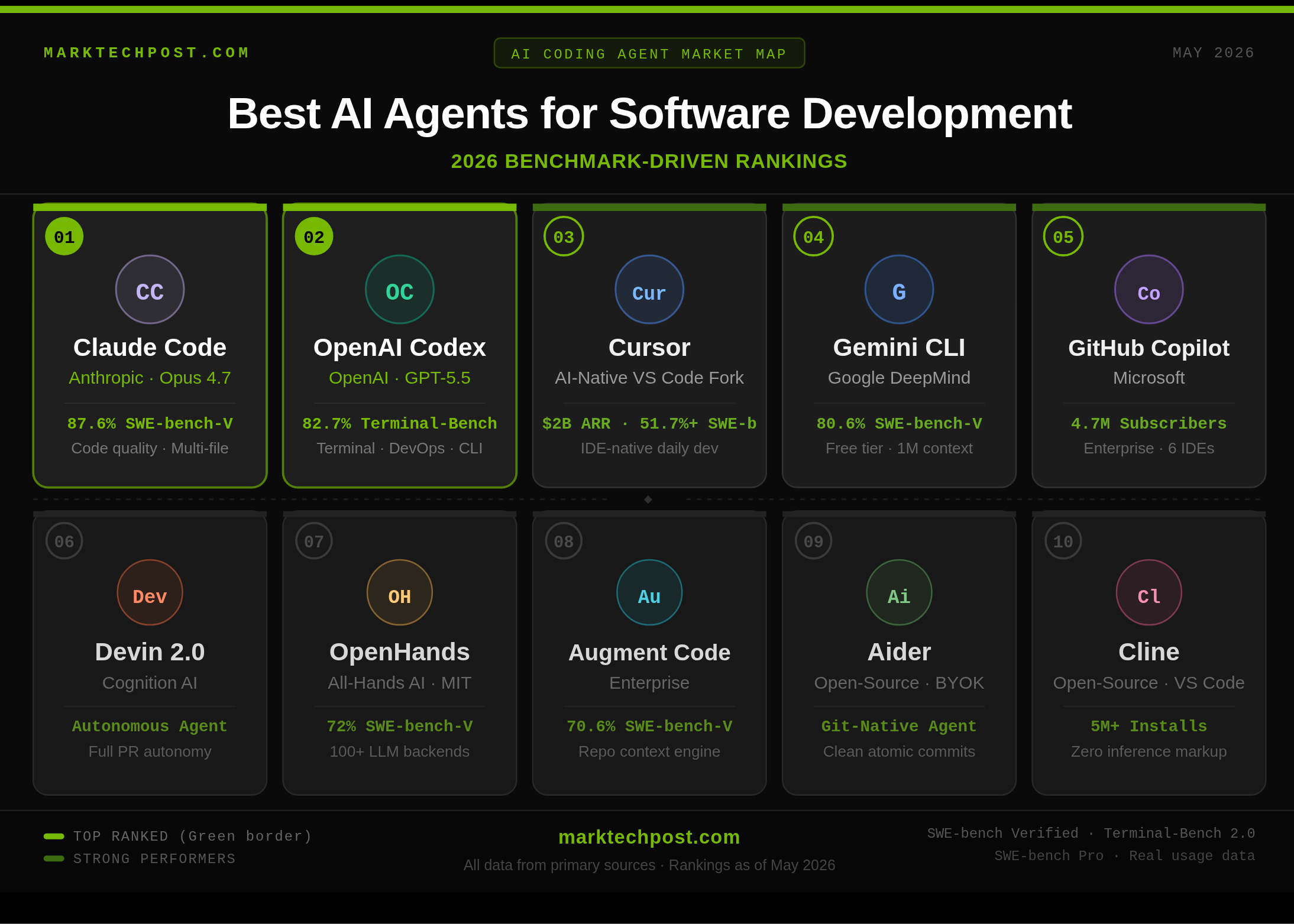
"Improvements on SWE-bench Verified no longer reflect meaningful improvements in models' real-world software development abilities," the team concluded. This bombshell means the rankings that developers, startups, and enterprises have relied on to choose between tools like terminal-based agents, AI-native IDEs, and cloud-hosted autonomous engineers are now suspect. The market, which saw 85% of developers using AI assistance by early 2026, faces a credibility crisis.
How SWE-bench Verified Worked—and Why It Failed
Since mid-2024, SWE-bench Verified has been the gold standard for measuring an AI agent's ability to autonomously fix real-world GitHub issues. It presented 500 problems from popular Python repositories, requiring agents to navigate code, generate patches, and pass tests without human intervention. Industry leaders like GPT-5.2, Claude Opus 4.5, and Gemini 3 Flash all scored highly, fueling fierce marketing claims.
However, OpenAI's auditors reviewed 138 of the hardest problems across 64 independent runs and found that 59.4% had fundamentally flawed test cases—demanding exact function names not mentioned in the issue, or checking unrelated behavior. Worse, every major model could reproduce the correct solutions verbatim from training memory. "The benchmark had become a test of memorization, not problem-solving," an OpenAI spokesperson said.
Background: The Evolution of AI Coding Agents
The AI coding agent market has exploded since 2024, evolving from basic autocomplete to fully autonomous systems that can read GitHub issues, fix bugs across multi-file codebases, run tests, and open pull requests—all without human typing. By 2026, the landscape includes distinct archetypes: terminal agents like Cursor and Codex CLI, AI-native IDEs like Copilot X and Replit Agent, cloud-hosted engineers like Devin, and open-source frameworks like Continue and Aider. All have been benchmarked against SWE-bench Verified.

The problem is that every vendor claimed to be the best based on these now-questionable numbers. "The benchmarks were the only objective way to compare tools, but they were already breaking down," said Dr. Alice Marston, a software engineering researcher at MIT. "This revelation forces the entire industry to reset."
What This Means for Developers and Tool Buyers
For now, developers should treat any AI coding agent benchmark with extreme skepticism. OpenAI recommends SWE-bench Pro as a replacement, but it is still in early adoption. Third-party evaluators like HumanEvalX and CodeBERT are also emerging. Until a new standard is established, the best advice is to test tools directly on your own codebase and use caution with automated rankings.
"Don't rely on a single metric," warned Marston. "Look for tools that show consistent performance across diverse tasks, and pay attention to community feedback." The market is likely to see a temporary freeze in major purchasing decisions, while vendors scramble to release new benchmark scores. The next few months will determine which agents truly lead, not just in memorization, but in real software engineering capability.
Related Articles
- Two Paths to Document Extraction: Comparing Rule-Based OCR and LLM Approaches for B2B Orders
- Unlocking Cloud Clarity: HCP Terraform Powered by Infragraph – Your Questions Answered
- Beelink EX Mate Pro: A Deep Dive into the 80 Gbps USB4 v2 Dock with Quad M.2 Slots
- JLab JBuds Open Wireless: A Bold Concept That Falls Short? — In-Depth Q&A
- Kubernetes v1.36 Revolutionizes Batch Scheduling with Decoupled Workload and PodGroup APIs
- 10 Critical Insights into the RAM and Storage Shortage Crisis
- Understanding Extrinsic Hallucinations in Large Language Models
- Chromebooks in 2026: Your Top Questions Answered